
- Secured loans are backed by collateral (a house, car, or deposit) the lender can seize if you default.
- Unsecured loans rely only on your creditworthiness — no asset is pledged, so rates are higher.
- Collateral usually means lower rates, bigger amounts, and easier approval — but your property is on the line.
- Worked example: $20,000 over 5 years costs $3,705 in interest secured (auto loan at 6.9%) vs $6,391 unsecured (personal loan at 11.5%) — a $2,686 difference.
- Defaulting on secured debt can cost you the asset; defaulting on unsecured debt hits your credit and can still end in court.
- What “Secured” and “Unsecured” Actually Mean
- How Collateral Changes Everything
- Secured Loans: The Common Types
- Unsecured Loans: The Common Types
- Head-to-Head Comparison
- Worked Example: $20,000 Secured vs Unsecured
- Approval Odds: Why Secured Is Easier to Get
- What Happens If You Default
- Which Should You Choose?
- Common Mistakes to Avoid
- Alternatives Worth Considering
- Frequently Asked Questions
A $20,000 auto loan and a $20,000 personal loan can look identical on paper — same amount, same five years. Yet one routinely costs thousands less in interest than the other. The difference is a single word: collateral. Whether a loan is secured or unsecured shapes its interest rate, how easy it is to get, how much you can borrow, and what happens if you cannot pay. This guide explains both types with real examples and a fully worked cost comparison.
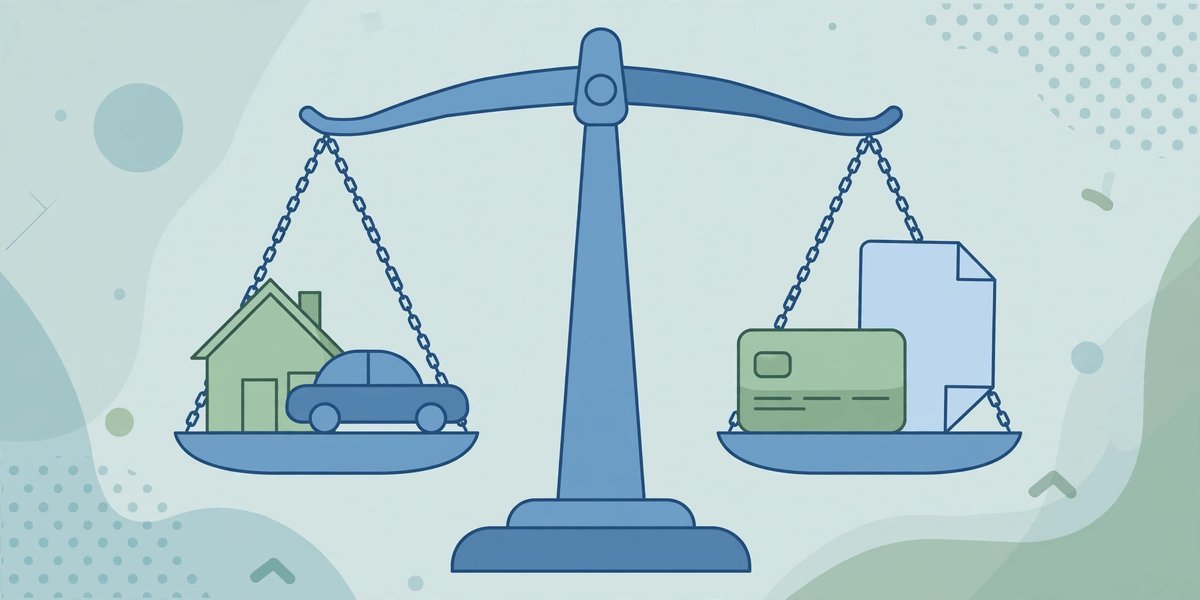
What “Secured” and “Unsecured” Actually Mean
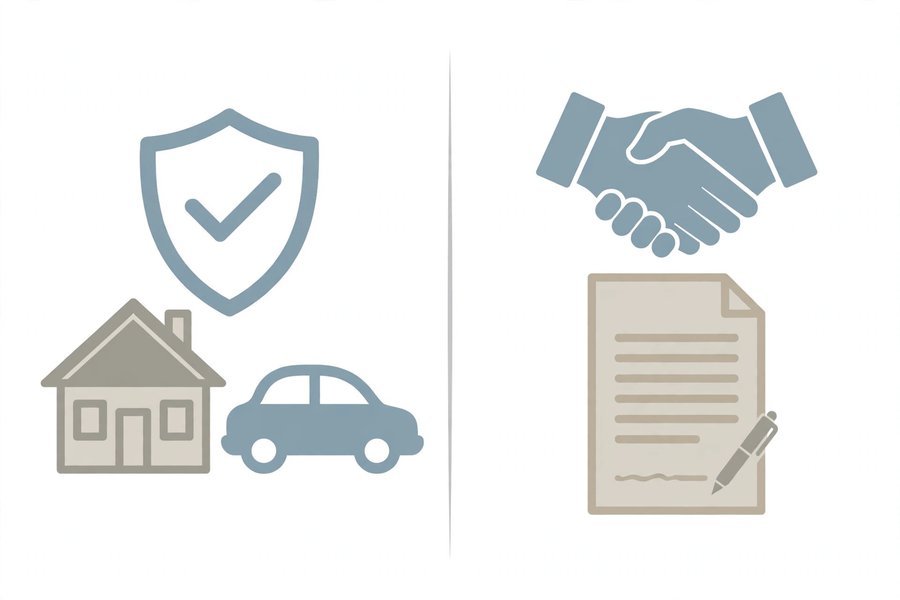
A secured loan is backed by an asset you pledge as collateral — a house, a car, savings, or investments. The lender registers a legal claim (a lien) on that asset. Pay as agreed and nothing happens to it; default, and the lender can seize and sell it to recover the debt. A mortgage is the classic example: the house secures the loan (see how mortgage loans work).
An unsecured loan has no collateral. The lender’s only security is your promise plus your credit history — your record of repaying past debts. A personal loan or credit card is the classic example. Because the lender cannot simply seize an asset on default, it charges for the extra risk through higher interest rates and stricter approval standards.
How Collateral Changes Everything
Collateral is not just a technicality — it reshapes every term of the loan:
- Interest rates: secured rates run lower because the lender’s loss risk is lower. The gap is often several percentage points.
- Loan amounts: secured loans scale with the collateral’s value; unsecured loans are capped by what your income and credit justify.
- Approval: thin credit or past problems? Collateral compensates — secured loans approve borrowers that unsecured lenders reject.
- Terms: secured loans often stretch longer, which lowers payments but extends interest.
- Risk: default on secured debt and you can lose the asset itself.
Secured Loans: The Common Types
- Mortgages — secured by the home; the lowest consumer rates.
- Auto loans — secured by the vehicle. See our car loan guide.
- Secured credit cards — backed by your own cash deposit; a common credit-building tool.
- Home equity loans / HELOCs — secured by your ownership stake in your home.
- Pawn and title loans — technically secured, but with punishing rates; best treated as a last resort.
Unsecured Loans: The Common Types
- Personal loans — fixed amounts and terms, approved on credit and income. Compare with our personal loan vs credit card guide.
- Credit cards — revolving unsecured credit; among the highest rates in consumer finance.
- Student loans — mostly unsecured. See federal vs private student loans.
- Payday and cash-advance loans — unsecured, extremely expensive; our emergency loans guide covers safer alternatives.
Head-to-Head Comparison
| Feature | Secured Loans | Unsecured Loans |
|---|---|---|
| Collateral | Required (house, car, deposit) | None |
| Typical interest rate | Lower | Higher (often much higher) |
| Approval difficulty | Easier — collateral offsets weak credit | Harder — credit and income carry all the weight |
| Maximum amounts | Higher (tied to asset value) | Lower (tied to income/credit) |
| Repayment terms | Often longer | Usually shorter |
| If you default | Lender can seize the collateral | Collections, credit damage, possible lawsuit — but no direct seizure |
Worked Example: $20,000 Secured vs Unsecured
Same borrower, same $20,000, same 5-year term — the only difference is collateral:
- Secured (auto loan at 6.9%): $395.08/month; total interest $3,704.86.
- Unsecured (personal loan at 11.5%): $439.85/month; total interest $6,391.13.
| Measure | Secured @ 6.9% | Unsecured @ 11.5% |
|---|---|---|
| Monthly payment | $395.08 | $439.85 |
| Total interest (5 yrs) | $3,704.86 | $6,391.13 |
| Total repaid | $23,704.86 | $26,391.13 |
The unsecured loan costs $2,686.27 more in interest — about 72% more — for the identical $20,000. Model your own scenarios with our EMI calculator.
Approval Odds: Why Secured Is Easier to Get
Unsecured lenders answer one question — will this person repay? — from your credit score, income, and debt-to-income ratio. Secured lenders ask a second question — if they don’t repay, what can I sell? That fallback lets them approve weaker profiles. Borrowers rebuilding credit often start with a secured credit card. See our credit-score improvement guide.
What Happens If You Default
Secured default: repossession or foreclosure; possible deficiency judgment; severe credit damage. Unsecured default: collections, charge-off, credit devastation, possible lawsuit — “no collateral” never meant “no consequences.” If repayment is shaky, our debt consolidation guide may help.
Which Should You Choose?
- Is the purchase itself the collateral? The secured loan is the natural, cheapest fit.
- Can you bear losing the pledged asset? If the asset is essential, think twice.
- Is your credit strong? Prime borrowers often get competitive unsecured rates — compare real offers by APR.
- How much do you need? Large sums push toward secured.
- Check affordability with our loan eligibility calculator.
Common Mistakes to Avoid
- Assuming “no collateral” means “no risk.”
- Pledging essential assets for non-essential spending.
- Comparing only monthly payments. Compare APR and lifetime cost.
- Taking title/pawn loans casually. Triple-digit APRs make these wealth traps.
- Falling for advance-fee “guaranteed approval.” A classic loan scam red flag.
Alternatives Worth Considering
- Secured credit card — build history with your own deposit.
- Credit-builder loan — borrowed amount sits in locked savings until you finish paying.
- Saving first — the cheapest loan is none at all.
- Employer or community assistance — hardship programs and credit-union small loans.
Frequently Asked Questions
What is the difference between secured and unsecured loans?
A secured loan is backed by collateral — an asset the lender can seize if you default. An unsecured loan has no collateral and relies entirely on your creditworthiness.
What is collateral on a loan?
An asset you pledge to secure a loan — commonly a home, vehicle, savings deposit, or investments. The lender registers a legal claim (lien) on it.
Are secured loans easier to get?
Generally yes — the lender can recover losses from the collateral, so it can approve borrowers with thinner credit files.
Why are unsecured loan interest rates higher?
The lender bears more risk with no asset to fall back on. In our $20,000 example, the unsecured loan costs $2,686 more in interest over five years.
What happens if you default on a secured loan?
The lender enforces its lien — repossessing the car or foreclosing on the home — and sells the asset to recover the debt.
What happens if you default on an unsecured loan?
Collections, charge-off, credit devastation, and potentially a lawsuit. Consequences are serious, just different.
Is a car loan secured or unsecured?
Secured — the vehicle itself is the collateral, which is why auto loan rates are far lower than personal loan rates.
Is a credit card secured or unsecured?
Most credit cards are unsecured. Secured credit cards are the exception, backed by your own cash deposit.
Which is better: secured or unsecured?
Neither universally. Secured wins on price and approval; unsecured protects your property but costs more. Match the loan to the purpose.
Do secured loans build credit?
Yes — any loan reported to the credit bureaus builds history when paid on time.
What is a secured credit card?
A credit card backed by your own refundable cash deposit, which usually sets your credit limit.
Can an unsecured loan become secured?
Not automatically, but a lender can require collateral when you refinance, and a court judgment can become a lien against property.