

- No legitimate lender guarantees approval regardless of credit — or asks you to pay before you receive the loan.
- Upfront “insurance” or “processing” fees via gift card, crypto, or wire are the single biggest red flag.
- Verify before you trust: check the license, confirm a real address, inspect the website.
- Caller ID can be faked — hang up and call back on a number you find yourself.
- Already paid or shared info? Stop contact, call your bank now, consider a credit freeze.
- Why Loan Scams Work (Even on Smart People)
- Red Flags 1–6: Demands for Your Money
- Red Flags 7–12: Signs of a Fake Lender
- How Legitimate Lenders Actually Behave
- The 10-Minute Lender Verification Checklist
- Phishing, Smishing & Impersonation Tactics
- Already Paid or Shared Your Info? Damage Control
- How and Where to Report a Loan Scam
- Common Mistakes That Cost Victims Twice
- What to Do Next: Your Action Plan
- Frequently Asked Questions
Today’s loan scammers run polished operations — professional websites, spoofed bank numbers, fake approval letters — built for the moment you’re desperate for money. But scams follow predictable patterns: learn the 12 red flags and a 10-minute verification routine to filter out nearly every scam.
Why Loan Scams Work (Even on Smart People)
Scams target people at their most vulnerable — an overdue bill, an emergency, a fresh bank rejection. The playbook has four moves:
- Manufactured urgency + isolation. “Approved in 10 minutes, money today” stops sounding suspicious when you need cash by Friday — and “don’t tell anyone about this exclusive offer” keeps you from getting a second opinion. The pressure is deliberate: it shuts down careful thinking.
- Borrowed authority. Spoofed caller IDs, copied logos, fake license numbers. These trust signals feel like verification; they aren’t.
- Targeting the rejected. “Guaranteed approval, no credit check” speaks directly to borrowers banks turned down. If that’s you, improving your credit score even slightly widens your legitimate options.
Your strongest defense is the simplest: slow down. No legitimate loan disappears because you took 24 hours to verify the lender.
Red Flags 1–6: Demands for Your Money
Most loan scams boil down to getting you to send money — these six catch the majority.
🚩 Flag 1: “Guaranteed approval” regardless of your credit
Scenario: “CONGRATS! You’re PRE-APPROVED for $5,000! Bad credit OK, no credit check! Reply YES.” You never applied.
No legitimate lender skips assessing repayment ability — “guaranteed approval” would be reckless. See it, walk away.
🚩 Flag 2: Upfront fees before you receive the loan
Scenario: You’re “approved” for $10,000 at a great rate — first just pay a $450 “refundable insurance fee” and the loan releases immediately.
The classic advance-fee scam: real origination fees are disclosed in writing and deducted from the loan you receive — never paid first. Any upfront “insurance” or “processing” fee means the loan doesn’t exist.
🚩 Flag 3: Payment via gift cards, crypto, wire, or payment apps
Scenario: To “activate” your loan, buy $300 in gift cards and read the codes over the phone — or send crypto to a wallet address.
Scammers demand fast, irreversible payment — gift cards, crypto, wires, P2P apps — which legitimate lenders never use. Absolute rule: a gift card request in a lending context is a scam, no exceptions.
🚩 Flag 4: The fake check — “deposit this, wire part back”
Scenario: A realistic-looking $4,800 check arrives — $800 more than discussed. “Deposit it and wire back the difference for insurance.”
Banks often show deposits as “available” before checks clear — you wire real money, then the check bounces as counterfeit and you owe the bank everything. Never wire money on a stranger’s check.
🚩 Flag 5: Extreme pressure to decide now
Scenario: “This 3% rate expires in two hours.” “One funding slot left — pay the fee now or lose your approval.”
Real lending is paperwork-heavy and slow — no legitimate loan evaporates because you slept on it. “Act now or lose it” confesses the offer can’t survive scrutiny.
🚩 Flag 6: Unsolicited “pre-approved” offers
Scenario: A robocall says you’ve been “selected” for $25,000. A social media DM offers instant approval.
Real lenders don’t blast loans to strangers. (Your own bank might send genuine pre-approvals — verify by logging in directly, never via the link.) Didn’t apply? It’s bait: don’t reply, click, or call — block and delete.
Red Flags 7–12: Signs of a Fake Lender
Sometimes the scam is who they are: fake lenders hide behind missing addresses, disposable chats, and copied branding.
🚩 Flag 7: No physical address — messaging apps only
Scenario: Slick website, no street address, no landline. Everything happens over WhatsApp with someone using only a first name. “We’re fully online.”
Real online lenders still have registered addresses and verifiable phones. One living only inside a messaging app is built to disappear.
🚩 Flag 8: No verifiable license
Scenario: The footer claims “License #LN-88412.” You search it — nothing. Ask which regulator issued it, and the agent changes the subject.
Lenders must generally be licensed where they operate — check your regulator’s register in minutes. Verify with the regulator directly; a number on the lender’s own site proves nothing.
🚩 Flag 9: Lookalike website
Scenario: The site mirrors a well-known bank — same colors, same logo — but the URL is “secure-bank-loans-apply.net” and pages show “not secure” warnings.
Check https with no warnings, a correctly spelled domain (scammers register lookalikes with swapped letters), and a complete site with legal pages. Never enter details via a message link; type the address yourself.
🚩 Flag 10: They want your online banking password
Scenario: “Log into your bank through our portal so we can verify income instantly.” The login page looks like your bank’s.
No legitimate lender needs your bank password. Real verification uses pay stubs, statements you upload, or services authorized on your bank’s own domain. A login form on a lender’s site is credential harvesting.
🚩 Flag 11: Spoofed calls “from your bank”
Scenario: Your screen shows your bank’s real name and number. The caller “confirms” your details, offers a limited-time loan, and needs the verification code just texted to you.
Caller ID is faked in seconds. Defense: hang up and call back on a number you find yourself — statement, card, or bank site. Never read a verification code to an incoming caller.
🚩 Flag 12: The “recovery” scam
Scenario: Weeks after losing money, a “fraud recovery agency” calls — they can get your funds back for an upfront “legal fee.”
Scammers trade victim lists because past victims pay under pressure. No legitimate service demands upfront fees to return stolen money. Report instead (see how to report).
How Legitimate Lenders Actually Behave
| Signal | ✅ Legitimate lender | 🚩 Scammer |
|---|---|---|
| Approval | Checks credit/income; declines some applicants | “Guaranteed approval,” no checks, everyone approved |
| Fees | In writing; deducted from loan proceeds | Upfront fee paid out of pocket before disbursal |
| Payments | Bank transfer, check, card — traceable | Gift cards, crypto, wire — irreversible |
| Contact | Physical address, verifiable phone | Messaging apps only, no address |
| License | Verifiable with your state regulator | Fake numbers or “no license needed” |
| Website | https, correct domain, complete legal pages | Lookalike domain, missing https |
| Paperwork | Written agreement with APR and terms first | Verbal promises, pressure to skip reading |
Legitimate lenders do charge fees — transparently, in writing, settled at or after disbursal. And your own bank may contact you — verify by logging in independently. Comparing real options? See our personal loan vs credit card guide.
The 10-Minute Lender Verification Checklist
- Search name + “scam / complaints / reviews.” Real lenders have history; scammers have warnings or none.
- Verify the license with the regulator — not the lender’s website.
- Confirm a real address on a map (not a PO box) and call a publicly listed number.
- Inspect the site: https, correctly spelled domain, complete pages. Days-old domains (free WHOIS check) are suspect.
- Demand everything in writing: APR, fees, schedule, license number. Scammers dodge; lenders produce it routinely.
- Never use their links. Find the company independently and initiate contact yourself.
- Compare 2–3 known lenders. Scam offers stand out next to real ones: impossible rates, zero questions, instant everything.
- Apply the 24-hour rule. “I need a day.” Lenders say “of course”; scammers escalate — which tells you everything.
One failed check is enough — one verified lie ends it.
Phishing, Smishing & Impersonation Tactics
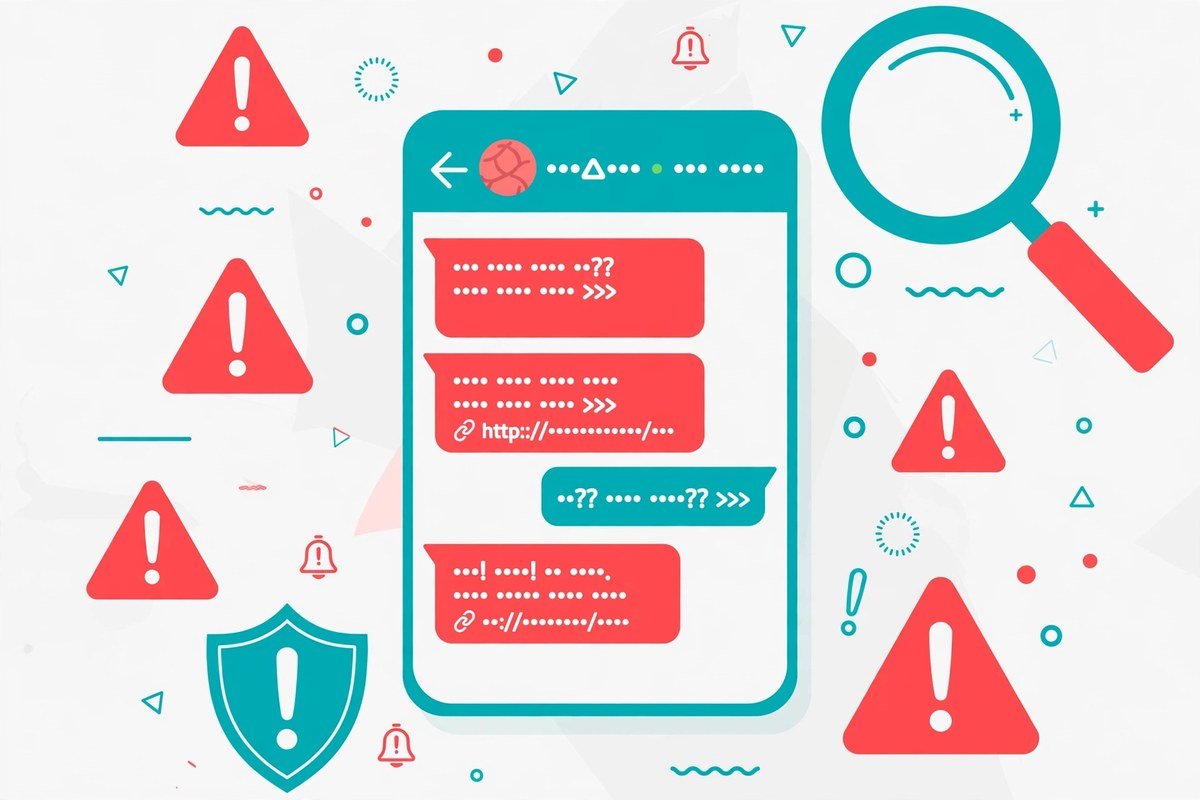
- Smishing: “Your account is locked — verify now” texts linking to fake login pages. Banks never ask you to log in via a text link.
- Spoofed numbers: caller ID shows your bank, but it’s a scammer (see Flag 11). Hang up; call back on a number you find yourself.
- Student-loan forgiveness scams: immediate/total forgiveness for a fee, plus password requests. Real federal programs never charge fees or ask for passwords.
- Fake debt collectors: threats of arrest over “unpaid debt.” Real collectors can’t have you arrested and must provide written validation of the debt.
- Government/relief impersonation: “SBA loan approved — pay the processing fee.” Real agencies use official domains, and no legitimate relief program demands upfront payment.
- Social media loan ads: fake testimonials (“$20,000 in one hour!”) linking to harvest pages. Guilty until proven innocent via the checklist.
The pattern: urgency plus their channel — their link, their number, their form. Break it by contacting the real organization yourself.
Already Paid or Shared Your Info? Damage Control
- Cut contact. Don’t argue or demand money back — block everything. More contact means more manipulation.
- Screenshot everything: messages, numbers, URLs, payment confirmations, the check. You’ll need it for disputes and reports.
- Call your bank now. Ask about stopping or reversing the payment — transfers, checks, and cards are sometimes reversible early. Credentials shared? Ask about closing and replacing the account.
- SSN or ID shared? Go to IdentityTheft.gov (FTC) for a personal recovery plan, then place a fraud alert or credit freeze with Equifax, Experian, and TransUnion.
- Change passwords on bank, email, and reused accounts; enable two-factor authentication.
- File a police report — you’ll need the number for disputes and claims.
- Monitor credit reports for accounts you didn’t open; keep the freeze until you’re confident.
- Watch for recovery scams (Flag 12) — “we’ll get your money back for a fee” is the second half of the con.
How and Where to Report a Loan Scam
Report even attempts — it helps investigators connect patterns. Scammers count on embarrassed silence.
- FTC — ReportFraud.ftc.gov: the main US channel; feeds a database used by hundreds of agencies.
- State attorney general: handles in-state consumer fraud, including unlicensed lending.
- Local police: file a report, especially after losing money.
- Your bank: flag the receiving accounts and protect yourself.
- FCC: for scam calls/texts and spoofed numbers.
- The impersonated company: its fraud department tracks impersonation and warns customers.
Also report the account on any platform used (social media, messaging app). Spotted something suspicious and want a second opinion? Contact us — we’ll help you sanity-check an offer.
Common Mistakes That Cost Victims Twice
- “Just one more fee.” The first fee was the test — the loan was never real, and every extra payment is pure loss.
- Spending “available” check funds. Available ≠ cleared. Wait for full clearance; never wire back an overpayment.
- Trusting caller ID. Hang up; call back on an independently found number. Every time.
- Clicking message links. The link is the attack — type addresses yourself.
- Sharing bank logins “to verify income.” Upload statements through official channels instead.
- Paying a “recovery” service. They bought the victim list; they’re the second scam.
- Staying silent. Report it — your report may be the one that connects the dots.
What to Do Next: Your Action Plan
- Need money urgently? Read our emergency loans guide — legitimate fast-cash options ranked, traps flagged.
- Verify any lender with the 10-minute checklist. One failed check = walk away.
- Build a trusted shortlist: your bank, a local credit union, one or two known lenders. Start there — never in your inbox.
- Reduce the temptation: “guaranteed approval” only tempts those expecting rejection. See our credit score guide.
- Report and warn: file at ReportFraud.ftc.gov, then forward this guide to one person — it might save them thousands.
Frequently Asked Questions
Is it normal for a lender to ask for a fee before giving me a loan?
No — not out of pocket before you receive the money. Legitimate origination fees are disclosed in writing and deducted from the loan disbursed to you. Any “insurance” or “processing” fee demanded before release — especially via gift card, crypto, or wire — is the hallmark of an advance-fee scam. The FTC’s rule: no legitimate lender says a fee guarantees the loan.
A lender guaranteed approval regardless of my credit. Is that a scam?
Treat it as one. Every legitimate lender assesses repayment ability and declines some applicants — “guaranteed approval” would be reckless. At best it’s predatory; usually it’s an outright scam. If poor credit draws you to these offers, improving your credit score even slightly opens real options.
What payment methods do loan scammers usually ask for?
Methods that are fast and irreversible: gift cards (codes read over the phone), cryptocurrency, wire transfers, and most P2P app payments. Once sent, the money is effectively gone — which is why scammers demand these and legitimate lenders never do. A gift card request in a lending context is a scam, no exceptions.
How can I check whether a lender is actually licensed?
Check the regulator, not the lender: search its license register for the exact company name and any quoted license number. Also confirm a genuine physical address on a map and call a publicly listed number — not the one that contacted you. Unverifiable license or a PO-box “address” means walk away.
I got a text saying I’m pre-approved for a loan I never applied for. What should I do?
Don’t reply, click, or call the number — block and delete. Real lenders don’t blast offers to strangers. (Your own bank might send genuine pre-approvals — verify by logging in directly, never via the link.) If it claims to be your bank, find their number yourself and ask.
What is the fake check loan scam, and how does it work?
The scammer sends a check — often for more than discussed — and asks you to deposit it and wire back the difference. Banks often show funds as “available” before the check clears; you wire real money, then the check bounces as counterfeit and you owe the bank everything. Never wire money on a stranger’s check.
Someone claiming to be from my bank called about a loan. How do I verify it’s real?
Hang up and call back on a number you find yourself. Caller ID is easily faked. Never read a “verification code” to an incoming caller; codes are for you to enter on official sites. A genuine banker won’t pressure you to stay on the line.
I already paid an upfront fee to a scammer. Can I get my money back?
Possibly — act now. Call your bank or card issuer immediately: transfers, checks, and card payments are sometimes reversible if caught early. Gift cards, crypto, and wires usually aren’t, but report them anyway. Screenshot everything, file a police report, and report at ReportFraud.ftc.gov and to your state attorney general. Beware “recovery” offers — the second half of the con.
I shared my Social Security number and bank details with a scammer. What now?
1) Call your bank — close compromised accounts, dispute unauthorized transactions. 2) Follow the recovery plan at IdentityTheft.gov (FTC). 3) Place a fraud alert or credit freeze with Equifax, Experian, and TransUnion. 4) Change passwords, enable two-factor authentication. 5) File a police report. 6) Monitor credit reports for unfamiliar accounts.
What’s the difference between a fraud alert and a credit freeze?
A fraud alert tells lenders to verify your identity before opening new credit — free, lasts a year, and one bureau notifies the other two. A credit freeze blocks most new credit entirely until you lift it — free, but set separately with each bureau. With a compromised SSN, a freeze is safer; an alert suits lighter protection while you’re applying for credit.
A company says it can recover my scammed money for a fee. Is that real?
No — it’s the recovery scam. Scammers trade victim lists because past victims pay under pressure. No legitimate service demands upfront fees to return stolen money, and officials don’t cold-call offering recoveries. The real path: your bank (disputes), police (report), ReportFraud.ftc.gov and your state attorney general (complaints).
Educational content only — not financial advice. Scam tactics change constantly; verify current guidance with official sources. See our Financial Disclaimer.