

- Refinancing replaces your current loan with a new one — usually to get a lower rate, a lower payment, or cash out equity.
- The two main types are rate-and-term (better loan terms, same balance) and cash-out (bigger loan, pocket the difference).
- The decision math is the break-even point: closing costs ÷ monthly savings = months to recover your costs.
- In our worked example ($280,000 at 7.25% → 6.0%), monthly savings of $345.12 recover $6,000 in closing costs in about 18 months.
- Watch the term-reset trap: a new 30-year loan can cost more lifetime interest even with a lower rate.
- What Refinancing Actually Means
- Rate-and-Term vs Cash-Out: The Two Main Types
- When Refinancing Makes Sense
- When Refinancing Is a Bad Idea
- The Break-Even Calculation
- Worked Example: $280,000 at 7.25% → 6.0%
- The Term-Reset Trap
- How to Refinance in 7 Steps
- Common Refinancing Mistakes
- Alternatives to Refinancing
- Frequently Asked Questions
Your loan felt like a good deal when you signed — but rates fall, credit scores rise, and incomes change. Refinancing lets you swap your old loan for a new one with better terms. Done right, it can save thousands; done blindly, the closing costs can eat every dollar of savings. This guide shows you exactly how refinancing works, when it pays, and how to run the break-even math yourself — with a fully worked example.
What Refinancing Actually Means
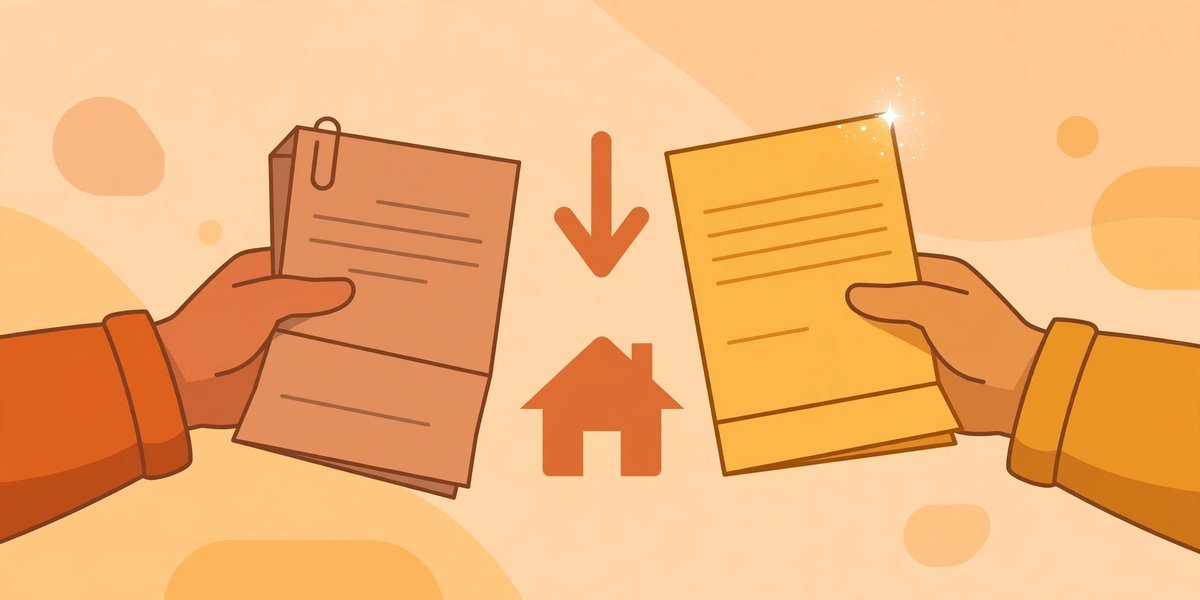
Refinancing means taking out a new loan to pay off an existing one. The new lender sends the payoff amount to your old lender, your old loan closes, and you start making payments on the new loan under its rate, term, and conditions. You are not “adjusting” your loan — you are replacing it entirely, which is why refinancing involves a fresh application, a fresh credit check, and fresh closing costs.
People refinance mortgages most often, but you can also refinance auto loans, student loans, and sometimes personal loans. The logic is identical in every case: if the new loan’s total cost (rate savings minus closing costs) beats keeping the old loan, refinancing wins. Everything in this guide is about proving that comparison with numbers, not gut feeling.
Rate-and-Term vs Cash-Out: The Two Main Types
Rate-and-term refinance
You borrow roughly the same balance you owe, but with a better rate, a different term, or both. The goal is a cheaper loan: lower monthly payment, less lifetime interest, or a faster payoff. This is the classic “rates dropped, let me grab the savings” refinance.
Cash-out refinance
You borrow more than you owe and pocket the difference as cash. Example: you owe $280,000 on a home worth $400,000 and refinance into a $320,000 loan — $280,000 pays off the old loan and you receive roughly $40,000 (minus costs). Borrowers use it for renovations, debt consolidation, or major expenses. The catch: you are converting home equity — your ownership stake — back into debt, usually at a higher rate than a rate-and-term refinance, and stretching repayment over decades.
| Feature | Rate-and-Term Refinance | Cash-Out Refinance |
|---|---|---|
| Loan balance | Stays about the same | Increases — you receive cash |
| Typical rate | Lowest available for your profile | Usually slightly higher |
| Main goal | Lower payment or less total interest | Access equity for a specific use |
| Biggest risk | Closing costs exceeding the savings | Turning secured equity into long-term debt for spending |
There is also a third, quieter option: refinancing an adjustable rate into a fixed rate (or vice versa). Borrowers often do this to escape an upcoming ARM reset — trading a low teaser rate for permanent predictability. Our fixed vs variable rates guide explains the trade-off.
When Refinancing Makes Sense
- Rates have dropped meaningfully. The old “1% rule” (refinance when rates fall a full point) is a rough starting point, but the real test is the break-even math below — a 0.5% drop on a large loan can still pay off.
- Your credit score improved. If you borrowed at a high rate with fair credit and now qualify for prime pricing, refinancing captures the improvement. See our credit-score guide.
- You want to kill PMI. If your home’s value rose enough that you now owe 80% or less of it, refinancing into a conventional loan can drop mortgage insurance — sometimes the biggest single saving.
- You want a shorter term. Moving from 30 years to 15 (or 20) at a lower rate raises the payment but slashes lifetime interest dramatically.
- You need to change the loan’s structure. Escaping an ARM before it adjusts, removing a co-borrower after divorce, or switching loan programs.
When Refinancing Is a Bad Idea
- You will move or sell before break-even. If the savings need 3 years to cover closing costs and you move in 2, you lost money.
- Your credit worsened. A lower score can mean a higher rate than your current loan — always compare real offers.
- You are deep into the loan. In the final years of an amortizing loan, payments are mostly principal — restarting the interest-heavy early years can cost more than it saves.
- You would stretch short-term debt over decades. Rolling credit-card balances into a 30-year cash-out refinance trades 3 years of pain for 30 years of interest.
- The “savings” come only from a longer term. A lower payment that adds 10 years of interest is not savings — it is deferral. (More on this in the term-reset trap.)
The Break-Even Calculation
The single most important refinance formula:
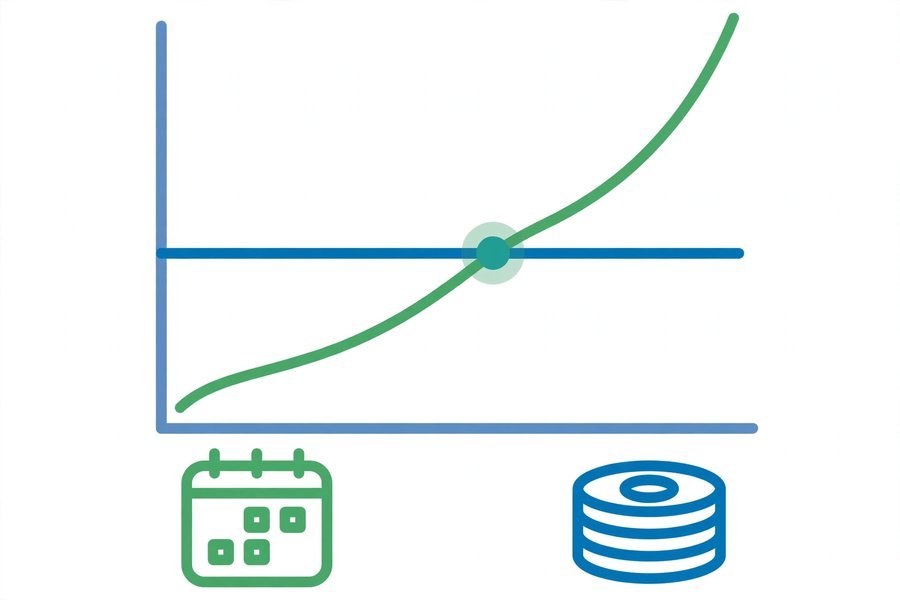
Break-even (months) = Total closing costs ÷ Monthly payment savings
If refinancing costs $6,000 and saves you $250/month, break-even is 24 months. Keep the loan at least that long and every month after is pure savings; sell or refinance again sooner and you never recovered the costs.
Closing costs on a refinance typically run 2%–5% of the loan amount — origination fees, appraisal, title work, and prepaid escrow — though “no-closing-cost” refinances exist (the lender covers costs in exchange for a slightly higher rate; compare the lifetime cost, not just the upfront $0).
Worked Example: $280,000 at 7.25% → 6.0%
Meet a borrower five years into a mortgage: $280,000 balance, 7.25% rate, 25 years remaining. A lender offers a 6.0% 30-year refinance with $6,000 in closing costs. All payments below use the standard amortization formula.
- Keep the old loan: $280,000 over 25 years at 7.25% → $2,023.86/month; remaining lifetime interest ≈ $327,158.
- Refinance to 6.0% / 30 years: $1,678.74/month; lifetime interest ≈ $324,347.
- Monthly savings: $2,023.86 − $1,678.74 = $345.12.
- Break-even: $6,000 ÷ $345.12 ≈ 17.4 months — about a year and a half.
| Option | Monthly payment | Lifetime interest |
|---|---|---|
| Keep old loan (25 yrs @ 7.25%) | $2,023.86 | $327,158 |
| Refinance (30 yrs @ 6.0%) | $1,678.74 | $324,347 |
| Refinance (25 yrs @ 6.0%) | $1,804.04 | $261,213 |
The 30-year refinance looks great on cash flow — $345/month freed up, costs recovered in 18 months. But look at lifetime interest: it barely beats the old loan ($324,347 vs $327,158), because five extra years of payments nearly wipe out the rate advantage. The 25-year refinance at the same 6.0% costs $1,804.04/month — still $220/month cheaper than today — while cutting lifetime interest to $261,213, a $65,945 saving versus keeping the old loan. Same rate, wildly different outcome: the term you choose matters as much as the rate.
The Term-Reset Trap
This is refinancing’s most expensive blind spot. Every new 30-year loan restarts the amortization clock — those interest-heavy early years where barely any principal is repaid (see how mortgages work). Five years into your loan you were finally reaching the phase where payments attack principal; refinancing into a fresh 30-year term throws you back to the interest-heavy start.
Defenses: match your remaining term (25 years left → refinance into a 25- or 20-year loan, not 30), or keep the old payment amount on the new loan — paying $2,023.86 on the 6.0% loan retires it years early and compounds the savings. Our prepayment guide shows how powerful extra principal is.
How to Refinance in 7 Steps
- Define your goal. Lower payment? Less lifetime interest? Cash out? Kill PMI? The goal determines the loan type and term — write it down before shopping.
- Check your credit and equity. Pull your reports, fix errors, and estimate your home’s value. Better scores and more equity unlock better rates.
- Run the break-even math. Get a real closing-cost estimate, compute monthly savings, and divide. If you cannot confidently stay past break-even, stop here.
- Shop 3–5 lenders. Compare APR (not just rate), closing costs, and term options. Include your current servicer — retention offers exist.
- Apply and lock. Submit documents (ID, pay stubs, tax returns, bank statements). Consider a rate lock once you are satisfied — locks typically last 30–60 days.
- Appraisal and underwriting. The lender verifies value and finances. Avoid new credit or large deposits during this window.
- Close and confirm payoff. Sign, fund, and verify in writing that the old loan is fully satisfied and its lien released.
Test affordability before you commit with our loan eligibility calculator, and model the new payment with the EMI calculator.
Common Refinancing Mistakes
- Chasing the payment, ignoring the term. A lower payment over more years can cost more total interest — always compare lifetime cost.
- Forgetting closing costs in the math. “Saving $200/month” means nothing until you divide the $7,000 it cost to get there.
- Refinancing repeatedly. Serial refinancing restacks closing costs every few years; each round needs its own break-even test.
- Cashing out for depreciating spending. Vacations and cars funded with 30-year home equity debt are wealth destroyers.
- Not shopping around. Lender offers on the same profile can differ by 0.25%–0.5% or more — that is tens of thousands over a mortgage’s life.
- Skipping the fine print on “no-cost” refis. The costs are baked into a higher rate; calculate whether the trade pays.
- Paying upfront “guarantee” fees. Anyone charging advance fees to guarantee refinance approval is waving a scam red flag.
Alternatives to Refinancing
- Extra principal payments — shorten your current loan and cut interest with zero closing costs or applications.
- Recasting (re-amortization) — some servicers let you make a large lump-sum payment and recalculate the monthly payment on the lower balance, for a small fee.
- HELOC or home equity loan — tap equity without touching your first mortgage’s rate (useful when your current rate is already low).
- Debt consolidation loan — for high-interest debts specifically, a consolidation loan may beat a cash-out refinance.
- Doing nothing — if the break-even fails, keeping your loan is the winning move. Not every rate dip deserves an application.
Frequently Asked Questions
What does it mean to refinance a loan?
Refinancing replaces your current loan with a brand-new one — new rate, new term, new closing costs. The new lender pays off the old loan, and you repay the new lender under the new terms. People usually refinance to lower their rate or payment, shorten the term, drop PMI, or take cash out.
How much does refinancing cost?
Typically 2%–5% of the loan amount — origination fees, appraisal, title work, and prepaid escrow. On a $280,000 loan that is roughly $5,600–$14,000. “No-closing-cost” options exist, but the lender recoups the cost through a slightly higher rate.
What is the break-even point?
Closing costs divided by monthly savings, in months. A $6,000 refinance saving $345/month breaks even in about 18 months. Stay past break-even and the savings are real; sell or refinance again sooner and you lost money on the deal.
When should I refinance?
When rates have dropped enough (or your credit improved enough) that the break-even math works within your expected time in the home — and when the new term does not erase the savings. Dropping PMI or escaping an ARM reset are also strong triggers.
Rate-and-term vs cash-out — what is the difference?
Rate-and-term refinancing keeps the balance about the same but improves the rate or term. Cash-out refinancing borrows more than you owe and gives you the difference as cash — at the cost of owing more, usually at a slightly higher rate.
Does refinancing hurt your credit score?
Expect a small, temporary dip from the hard inquiry and the new account. Multiple refinance applications within a focused 2–3 week shopping window are generally treated as a single inquiry for scoring purposes. On-time payments on the new loan rebuild the score.
How many times can you refinance?
There is no legal limit, but each refinance restacks closing costs and restarts amortization. Every round must pass its own break-even test — serial refinancing every couple of years usually destroys more wealth than it creates.
Can I refinance with bad credit?
It is harder and the offered rate may exceed your current one — in which case refinancing makes no sense. Government programs (like FHA streamline options in the US) can be more forgiving, but improving your score first usually pays far more.
Is cash-out refinancing a good idea?
It can be, for value-adding uses like renovations or consolidating very high-interest debt — with a strict repayment plan. It is a poor idea for vacations, vehicles, or lifestyle spending, which turns short-lived purchases into decades of secured debt.
Should I refinance from a 30-year to a 15-year loan?
If the higher payment fits your budget comfortably, the interest savings are enormous and you build equity fast. If the payment would strain you, a 20- or 25-year term — or keeping the 30-year and making extra principal payments — captures much of the benefit with less risk.
What is the 1% rule?
A rough guideline saying refinancing is worth considering when rates drop about one percentage point below your current rate. It is only a starting point — on large loans, even 0.5% can pay off, and the break-even calculation is the real decision tool.
How long does refinancing take?
Typically 30–45 days from application to closing, similar to a purchase mortgage — driven by appraisal, underwriting, and document gathering. Streamline programs can be faster.